
Widad Salloum, Raseef22, August 22, 2026
The growing importance of translation is evident in a world that counts more than seven thousand living languages and over one hundred official languages. It constitutes an essential bridge between peoples and cultures: it broadens the field of human knowledge, enables the exchange of cultural creations, fosters understanding and dialogue, and makes possible commercial, tourist and political interactions as well as the circulation of information at every level.
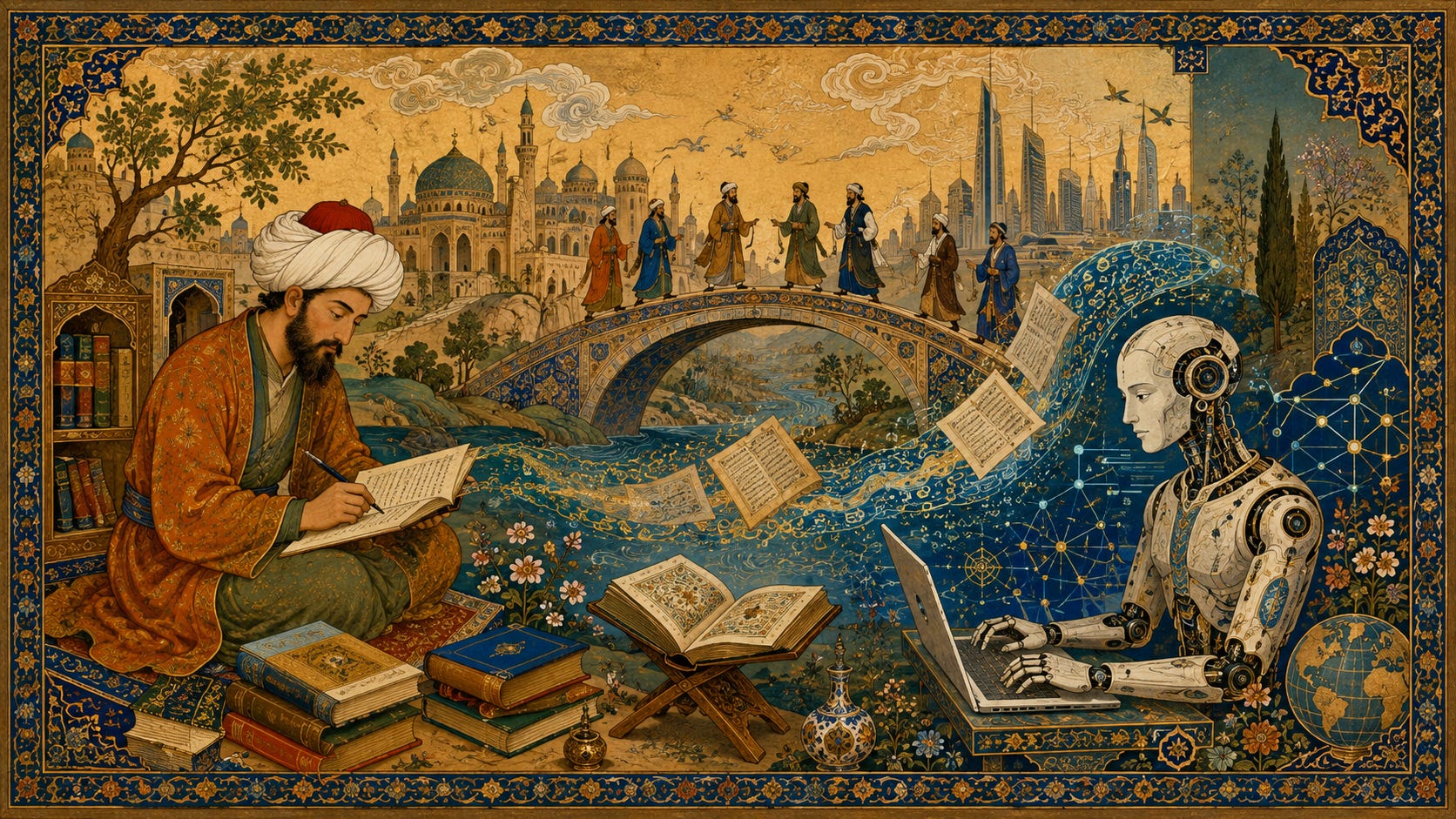
Translation is not limited to the simple transfer of words from one language to another; it is intrinsically linked to the faithful rendering of the text, imbued with the spirit of the source language and with meanings tied to linguistic heritage and human memory, rich in the symbols inherited by each country. It is a complex field in which technique is intertwined with culture and human experience. It now contributes to the production of knowledge and the preservation of culture.
A literal translation can convey a meaning entirely different from the one intended. In a specialized field, particularly medicine, an error can put human lives at risk. In political relations, one may think of the New York Times article on the role of translation errors, or even literal translations, in the escalation of tensions between the USA and Japan, which culminated in the atomic bombings of Hiroshima and Nagasaki in 1945.
The article, written by Gar Alperovitz, is entitled “Good Translation Might Have Prevented Hiroshima[1].” It recounts how a word used by the Japanese Prime Minister at a press conference, in response to the U.S. threat, was translated: he said that it was being “discussed in silence,” using the Japanese term “mokusatsu,” which carries multiple meanings. The word was nevertheless translated in a way that suggested overt contempt, which the USA interpreted as a rejection of the ultimatum; they then gave the order to bomb the Japanese cities with atomic weapons.
With the advent of the third millennium, artificial-intelligence algorithms began to be used in translation, in response to the growing demand for simultaneous interpretation and the imperative of speed in processing large volumes of text. This raises several questions: can artificial intelligence provide a translation that takes into account the cultural context of texts and avoids the errors mentioned above? Can it reproduce texts while respecting their rhetorical styles and emotional tone? Can it replace the human translator, whether in simultaneous interpretation or in the simple rendering of texts? And to what extent can the translator rely on artificial intelligence?
Artificial intelligence excels in speed and in its ability to process immense quantities of data. By contrast, its ability to understand cultural context, tone, metaphors and what lies between the lines of a text remains in question.
The Syrian translator Thaer Deeb, author of numerous translations in literature, politics, thought and research, and a member of juries for several Arab literary prizes, told Raseef22: “There is no doubt that artificial intelligence has become a competitor to humans in the field of translation, but only to a certain extent. While it performs many translation tasks once entrusted to humans, it nevertheless remains bound to follow in their footsteps in the vast and ever-evolving realm of linguistic usage; in the arena of the eternal struggle between fixed language and human speech; between the dead language of dictionaries and the use of living language, with everything this entails: new metaphors, rhetoric and innovations, all stemming from the fact that language is a social entity renewed at the pace of human beings and their speech.”
Deeb continues: “I am not an expert in simultaneous interpretation and know nothing of its subtleties, nor of the reasons that drive platforms and media outlets to resort to artificial intelligence. However, I do see concerns about the commercial use of machine translation by Arabs. This use is archaic, like all our imports and borrowings, compared with that of the countries from which we import.”
He believes: “I have no objection to using artificial intelligence in my work, even though I have not yet done so; provided that I intervene in such a way that the translation remains my translation and in my style, rather than a machine translation.”
As for Jacqueline Salam, a poet, sworn interpreter and author of poetic and literary translations from English into Arabic published in numerous Arab newspapers and magazines, she believes that “the translator is superior to artificial intelligence and will remain the master of automated translations. With more than twenty years of experience in simultaneous interpretation, I find that simultaneous interpretation performed by a human translator is entirely rooted in the reality on the ground in Canada, where I live and work. It contains nuances, subtleties and ambiguities that lend themselves to multiple interpretations, nuances that the machine, despite technological advances, cannot grasp in our time.”
In her interview with Raseef22, Salam adds: “I sometimes work as an interpreter in some of the most modern hospitals in the world. The physical presence of the interpreter at the workplace is essential, and it is impossible to communicate with patients through electronic translation. Every diagnosis or complaint must be heard and translated accurately, followed by questions to obtain clarification. The same applies to translation in the judicial and legal fields, where tone of voice, facial expressions and sociocultural references require an interpretation that a machine cannot provide.”
That is why the presence of people in court or in hospital remains necessary when questioning or an interview must take place face to face. We have also begun to work remotely, through audio and video programs, in many cases that require neither the presence of an interpreter nor that of the person in public places such as courts or hospitals.
She explains: “I can also point out that some of the initial exchanges, which are fairly simple, take place with the help of machine translation between the requester (the person who needs an interpreter) and the provider (the person who decides, judges and establishes the diagnosis). These exchanges are used to arrange a meeting or a brief call to set an appointment with the interpreter.”
In the translation of official documents, such as official and commercial transactions, the language is direct and clear and generally allows for a successful translation. This is the approach currently favored. I sometimes come across pages of advertisements and marketing materials on social media. I see them in Arabic, even though I know the original is in English, and they contain amusing errors, because translation from Arabic into international languages is still developing.
When a machine speaks all the languages of the world, can it truly understand human beings?
Salam believes that “complete and secure electronic translation of poetry, novels and philosophy is impossible. Revision therefore becomes paramount. The translator loses precious time trying to reproduce faithfully the meaning of metaphors, allusive figures and cultural connotations as they appear in the original text.”
The Syrian translator Moataz Harami confirms this: “Artificial intelligence is certainly a serious competitor to humans in the field of translation, but it does not replace them completely. Artificial intelligence excels in speed and quantity, while humans excel in quality and creativity.”
Artificial intelligence has several advantages. Its speed is exceptional: it translates thousands of pages in seconds, at low cost, with free or very inexpensive alternatives for businesses and individuals. It is permanently available, 24 hours a day, 7 days a week. It also supports many languages and translates instantly between hundreds of them.
By contrast, human strengths lie in understanding context and culture (humans accurately grasp popular terms, jokes and figurative expressions), literary creativity (a machine cannot convey the emotions and aesthetics of a novel or a poem), and stylistic flexibility (a human translator can adapt the tone to the target audience).
Harami adds to Raseef22: “Platforms and media outlets use artificial intelligence in translation for several strategic and economic reasons, including: immediate speed: instantly disseminating breaking news and world events in different languages, without delay; cost reduction: reducing the considerable budgets devoted to employing armies of human translators; mass production: translating enormous quantities of articles, reports and videos in a matter of seconds; multilingual coverage: reaching a global audience speaking rare languages for which it may be difficult to find human translators; process automation: integrating machine translation directly into publishing systems in order to simplify the daily workflow; archiving and research: rapidly translating foreign journalistic documents and sources to facilitate journalists’ research and investigative work.”
He does not personally use artificial intelligence as a translator. He says he directs it like a true engineer of meaning: “I leave the quantitative processing of texts to the machine: filtering terms, adjusting rules and generating first drafts at lightning speed. Artificial intelligence excels at translating words, but it is incapable of perceiving what lies between the lines.”
That is where my value lies: the machine translates the text as it is written, while I translate the meaning intended by the author. Technology lacks human consciousness; it grasps neither irony, nor the nuances of cultural context, nor the emotions that give the text its soul.
He therefore observes that “artificial intelligence gives me superhuman speed, and I give it a human identity. Today, the translator who ignores artificial intelligence will be overtaken by time, and the one who relies on it entirely will be replaced by the machine. But the intelligent translator is the one who uses technology to humanize their translation. Thus, I use artificial intelligence to the maximum on the procedural level, and to the minimum on the creative level, so that it does not negate my role as translator and researcher, and above all, so that it does not negate my human spirit in all its creative manifestations.”
In this context, the Syrian writer and journalist Hanan Ali, a translator accredited by the Saudi Ministry of Culture and the author of twelve works translated into Arabic and English, told Raseef22: “Artificial intelligence does not compete with the human translator, but challenges the ‘machine translator’ that lies dormant in some human beings. The machine certainly excels in pattern recognition and in calculating the mathematical probabilities of words, but translation is a process of consciousness, not a mere linguistic equation. The machine translates what is said, while the human translates what is not said. In this way, the human conveys the silence between the lines, the veiled sigh, sarcasm and bitter pain - that is, what escapes computational algorithms. The real danger lies not in the machine’s superiority, but in the domestication of our minds into translating like it.”
When a single word can change the fate of thousands of people, does the speed of translation become a virtue or a danger?
According to her, the use of artificial intelligence as a translation tool by platforms and media outlets can be explained by the fact that modern media prioritize speed over depth. We live in a world obsessed with immediacy, constantly seeking ephemeral content to fill the digital void. Artificial intelligence offers these platforms a “quick and free meal” of words ready for immediate consumption; raw material devoid of soul, but which fulfills its informational function in an emergency. In my view, this is a purely economic issue: artistic quality is traded for financial security and speed.
Regarding simultaneous interpretation, she states: “Artificial intelligence may have succeeded in imitating speed, but it has failed to grasp the situation. In simultaneous interpretation, the human interpreter plays the role of a psychological and cultural therapist; they listen to the voice, analyze body language, understand slips of the tongue and reformulate the idea so as to adapt it to the atmosphere and culture of the listener. As for artificial intelligence, despite its astronomical vocabulary, it remains color-blind, blind to nuances; it may convey the word with extreme precision, but it falls into the trap of literalism and a superficial idealism that deprive simultaneous dialogue of its spontaneity and human vitality.”
Asked about her use of artificial intelligence, she replied: “Yes, I use artificial intelligence, just as a sculptor uses an electric chisel; I use it as a silent assistant to lift heavy piles of texts, search for synonyms and verify standardized terms with digital efficiency. I sometimes resort to translations in languages other than English and French, languages I do not master and that have slipped into certain works. But I never allow it to alter the essence of the phrasing or my personal visions. Its role is limited to the ‘raw material.’ As for translating the text, refining it, breathing life and boldness into it, giving it that human touch and living spirit, that belongs exclusively to me, to my pen, which I do not share with the machine.”
Note
[1] Gar Alperovitz, « Good Translation Might Have Prevented Hiroshima », The New York Times, August 21, 1989.
All our publications are free and Copyleft. They may be republished, in whole or in part, under following conditions:
→ keeping the title and content
(text, images, editor’s or translator’s notes, boxes)
→ crediting the author(s) and/or translator(s)
→ inserting a clickable link to the source.
Any monetization or commercial use of these publications is prohibited and will be subject to legal action.